


Learn to Read and Write Malayalam Alphabets and Words
Jul 8, 2024 • By Redparrot
Learn to Read and Write Malayalam Alphabets and Words
Malayalam is one of India's most beautiful and expressive languages. Spoken primarily in the state of Kerala, as well as the union territories of Lakshadweep and Puducherry, it may represent just 2% of India's population — but its speaker base stretches well beyond borders, with over 44 million people worldwide calling it their mother tongue.
Thanks to a large and vibrant Malayali diaspora across the Gulf—particularly in the UAE, Qatar, and Saudi Arabia—Malayalam is heard and spoken far from Kerala's shores every single day.
Malayalam belongs to the Dravidian language family, which also includes Kannada, Tamil, and Telugu. It has 56 letters and is widely considered one of the more complex languages in the world to learn. But "complex" doesn't mean "impossible" and with the right approach, it's far more accessible than most people expect.
Why Learn to Read and Write Malayalam?
For Malayali families living abroad, this question matters more than ever. As of 2013, an estimated 1.6 million Malayali expatriates were living in various countries, many alongside their children. Since most of these families don't hold permanent residency, returning to Kerala eventually is a reality for many — and when that day comes, being able to read and write Malayalam isn't just useful, it's essential.
Here's why:
And it's not just for Malayalis. Anyone planning to live in or visit Kerala will find that even a basic ability to read the language opens doors, builds connections, and makes the experience far richer.
Why Do So Many People Struggle With Malayalam?
It's a fair question and one many learners quietly wonder about.
Malayalam does have a reputation for being difficult, especially when it comes to pronunciation and writing. Take the letter "Zha" (ഴ), for example, as heard in the word "Mazha" (മഴ—meaning rain). It's a sound that simply doesn't exist in most other languages, and it trips up beginners regularly.
But pronunciation aside, the traditional method of teaching Malayalam is arguably the bigger problem. The conventional approach starts with every single letter of the alphabet before moving to words, and only then to sentences. It's a long, dry process—and it tends to put people off before they've really begun. The very first letter, "A" (അ)—the same letter that starts Amma (അമ്മ, Mother)—is one of the hardest to write in the entire language. Starting there is a fast track to frustration.
Finding quality learning resources adds another layer of difficulty. While platforms like YouTube have some helpful content, sorting through it all to find something truly effective takes time most learners don't have.
A Better Way to Learn
The approach here is different and deliberately so.
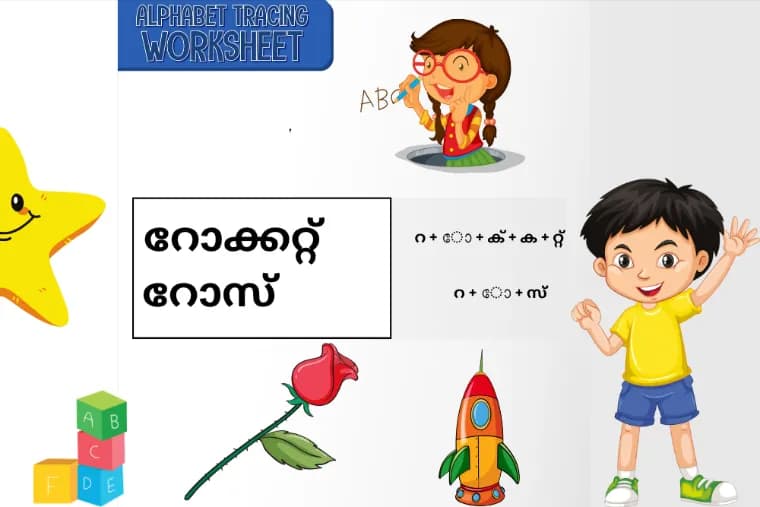
Rather than starting with the hardest letters, we begin with the simplest: "Ra" (as in the word "Thara"). From there, students naturally progress to other letters that share similar forms, learning words built from those letters along the way. By the time a student reaches their very first class, they're already writing — not just studying.
Throughout the entire course, letters, words, and sentences are taught together. This means students can write and read simple sentences before they've even reached the halfway point of the program.
What the Course Covers
The course teaches vowels (Swaraksharangal) and consonants (Vyanjanaksharangal) together, a method that allows students to form sentences within just eight classes.
Here's roughly how the journey unfolds:
By the end of the course, students can read and write Malayalam fluently—including short stories. A great place to practice is Guide: How Kids Can Start Reading Malayalam, which features simple Malayalam stories ideal for new readers.
How Classes Work
All sessions are conducted live over Zoom, which means students can learn from wherever they are: at home, abroad, or anywhere in between. There's no commute, no classroom stress, and every session is interactive. Students can ask questions in real time and get answers on the spot.
How to Enrol
We offer a free demo class so students (and parents) can experience the teaching style before committing to anything. If you're happy with the session, you can enroll at that point—no pressure.
To book your free demo, simply send a WhatsApp message to +91 90374 95104.
Tips to Keep Improving Outside of Class
The classroom is just the beginning. A few simple habits in daily life can make a real difference to reading and writing fluency:
Watch the news: Try reading the scrolling text on Malayalam TV channels. Popular channels include Asianet, Manorama News, Mathrubhumi News, Media One, and 24 News.
Read a newspaper: Pick up a copy of Manorama, Mathrubhumi, Madhyamam, or any other Malayalam daily and make a habit of reading a few lines each day.
Read while you travel: When in Kerala, make an effort to read place boards, bus destinations, shop signs, and film posters along the road. It's low-effort practice with real-world payoff.
Read children's magazines: Publications like Balarama, Poombatta, Malarvadi, and Kalikkudukka use simple, clear language perfect for building confidence.
Write in Malayalam: Use Google's Manglish input tool to write in Malayalam online. Even a few sentences a day builds muscle memory quickly.
Final Thought
Learning to read and write Malayalam is genuinely achievable especially when the method is right. It doesn't have to be intimidating or boring. With a structured approach, a patient teacher, and a little daily practice, you'll be surprised how quickly things click.
Leave a Reply
Your email address will not be published. Required fields are marked *
STAY CONNECTED WITH RED PARROT SCHOOL
Stay updated on new programs, resources and language learning insights

Information
- Red Parrot Language School.
- No. 4/461, 2nd Floor Suite No. 399 Valamkottil Towers Judgemukku, Kakkanad, Kochi, Kerala 682021
- info@redparrotschool.com
- 9037495104