


How to Teach the Arabic Alphabet to Kids: Fun Ways for Parents
Nov 19, 2026 • By Redparrot
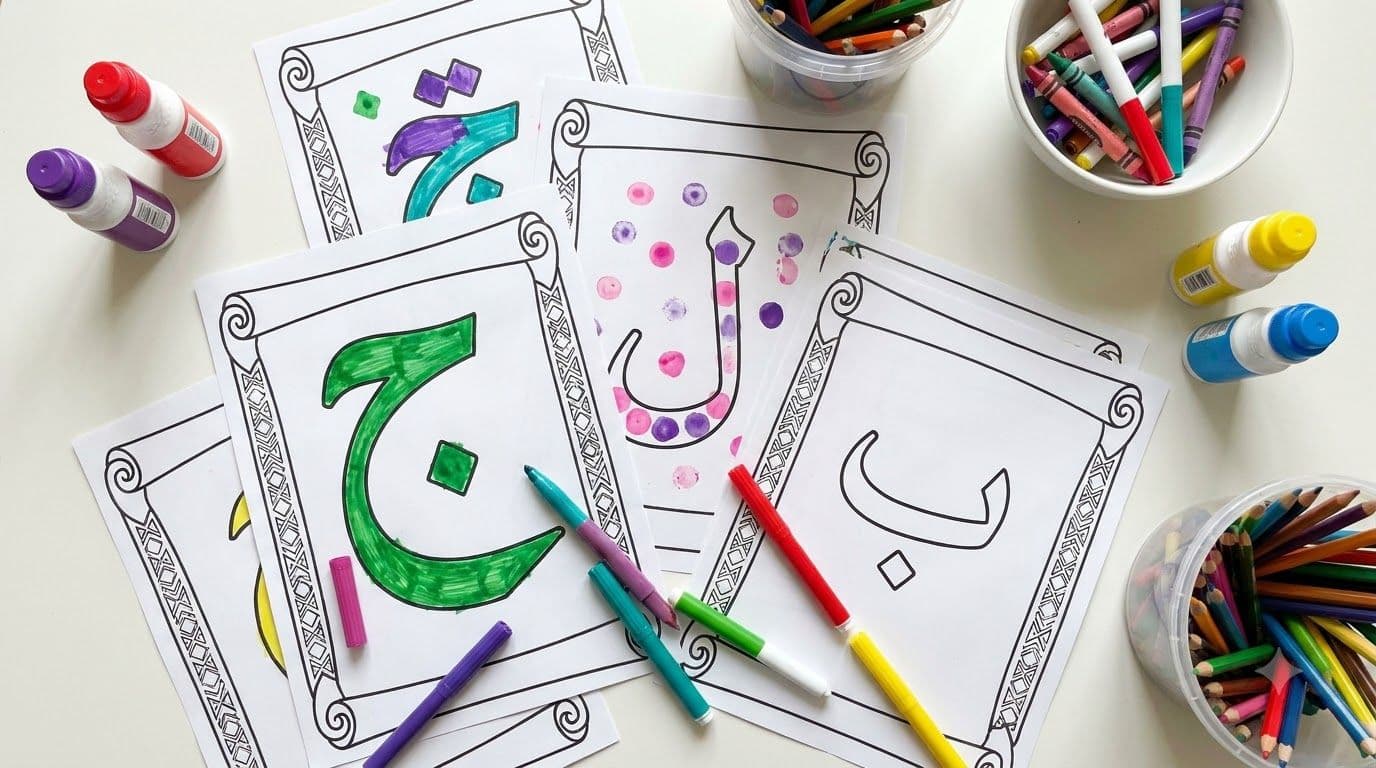
How to Teach the Arabic Alphabet to Kids: Fun Ways for Parents
Teaching the Arabic alphabet works best when children learn to recognise letters, hear their sounds, and practise in small, steady steps. Here, we explain why Arabic letters can feel unfamiliar to young learners and share simple activities you can try at home. We also explain when your child may need additional guidance from a teacher. A four-week plan gives you a starting point, and a list of common mistakes shows you how to keep practice encouraging rather than stressful for your child.
Why the Arabic Alphabet Feels Difficult for Kids
Arabic has 28 basic letters and is written from right to left. Many letters change their appearance when they join other letters, and some sounds may be new to your child. These differences are manageable, but they explain why memorising an alphabet chart alone is not enough.
When your child learns the name, shape, and sound together, the alphabet starts to feel less like a list to memorise.
Fun Ways to Teach the Arabic Alphabet to Kids at Home
The best ways to teach the Arabic alphabet at home are short games that ask your child to notice, say, and recognise letters instead of copying pages of symbols. Changing the activity while keeping the same goal gives your child fresh chances to remember sounds.
Each game below practises one skill, so you can rotate them across the week:
Short sessions suit young children better than long ones. If one game loses their interest, switch to another and keep the same letter.
Learn the Arabic Alphabet with an Online Arabic Teacher
An online Arabic teacher can help when your child knows the letters but finds them hard to say or read in words. In a live lesson, the teacher listens closely and corrects mistakes as they happen.
Children often mix up ح and ه. A recording plays both sounds, but a teacher hears which one your child is getting wrong and helps them fix it. You do not need to know Arabic. Simply practise at home what the teacher taught.
A few simple habits make the lessons count:
Red Parrot School’s Online Arabic Course for Kids
At Red Parrot Language Learning School in Kakkanad, Kochi, we offer an online Arabic course for kids that introduces letter recognition, pronunciation, and writing through structured lessons and guided practice. We start with letters and sounds. Short words come after that.
4-Week Plan to Learn Arabic Letters for Beginners
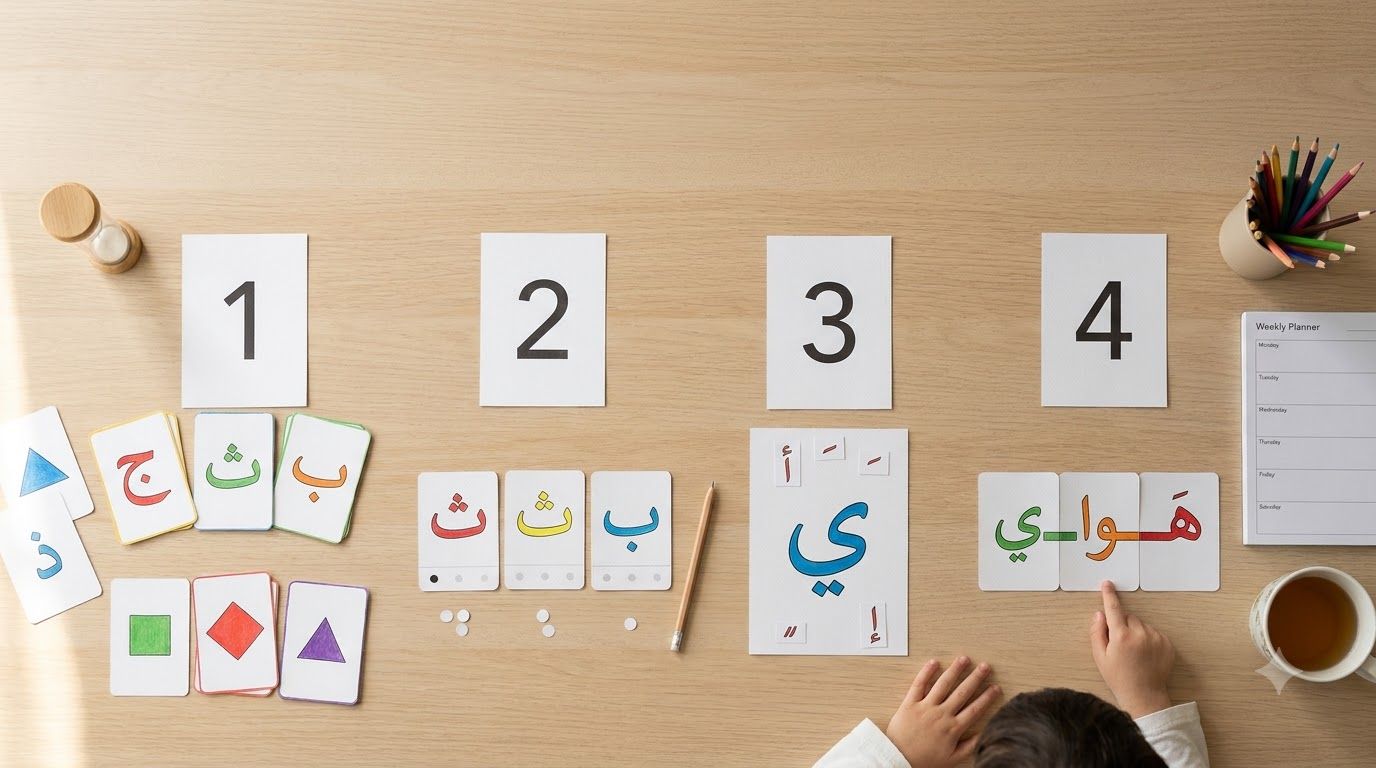
A four-week plan can take your child from spotting letters to reading a few short words. Sessions last about 10 minutes. Start with two or three letters, and repeat anything that feels hard. This four-week plan is flexible, so you can adjust the pace based on your child’s learning progress.
| Week | Focus | What you can do |
| Week 1 | Letter recognition | Pick two or three letters, such as ب (baa). Say each sound aloud, then play a matching game with letter cards |
| Week 2 | Letter shapes | Lay ب, ت, and ث side by side. Your child counts the dots, then traces each letter with a finger before using a pencil |
| Week 3 | Short vowel marks | Show the small marks above and below a letter. The same ب reads “ba”, “bi”, or “bu”, depending on the mark. |
| Week 4 | Simple word reading | Join letters they already know into a short word and read it together. Point out how each letter changes shape in the middle of the word |
If your child finds a particular week difficult, repeat the activities before moving forward. Some children may need extra practice recognising letters with different dot patterns, especially in Week 2.
Read more about How to Choose the Right Arabic Tutor for Your Child
Common Mistakes When Teaching Arabic Letters to Children
The most common mistakes are rushing through all 28 letters, correcting every error, skipping connected forms, and expecting equal progress in every skill. Reciting the alphabet from Alif (ا) to Yaa (ي) is one skill. Spotting a single letter inside a word is another, and it needs separate practice.
When we assess a child’s progress in class, we look for one thing: can they find a letter inside a word and say it correctly? Reciting all 28 names is a weaker sign.
Conclusion: Help Your Child Start Reading Arabic with Red Parrot
The best starting point is a small, repeatable routine that connects letters with sounds and meaning. You need neither expensive materials nor long lessons. Notice what your child understands, revisit difficult shapes, and let reading develop gradually.
If you are exploring Arabic classes for children online, we offer live reading and writing lessons at Red Parrot. Contact us to discuss your child’s learning level and ask about available classes.
Leave a Reply
Your email address will not be published. Required fields are marked *
STAY CONNECTED WITH RED PARROT SCHOOL
Stay updated on new programs, resources and language learning insights

Information
- Red Parrot Language School.
- No. 4/461, 2nd Floor Suite No. 399 Valamkottil Towers Judgemukku, Kakkanad, Kochi, Kerala 682021
- info@redparrotschool.com
- 9037495104