


How to Read Malayalam Newspaper Headlines: A Beginner’s Guide
Oct 27, 2026 • By Redparrot
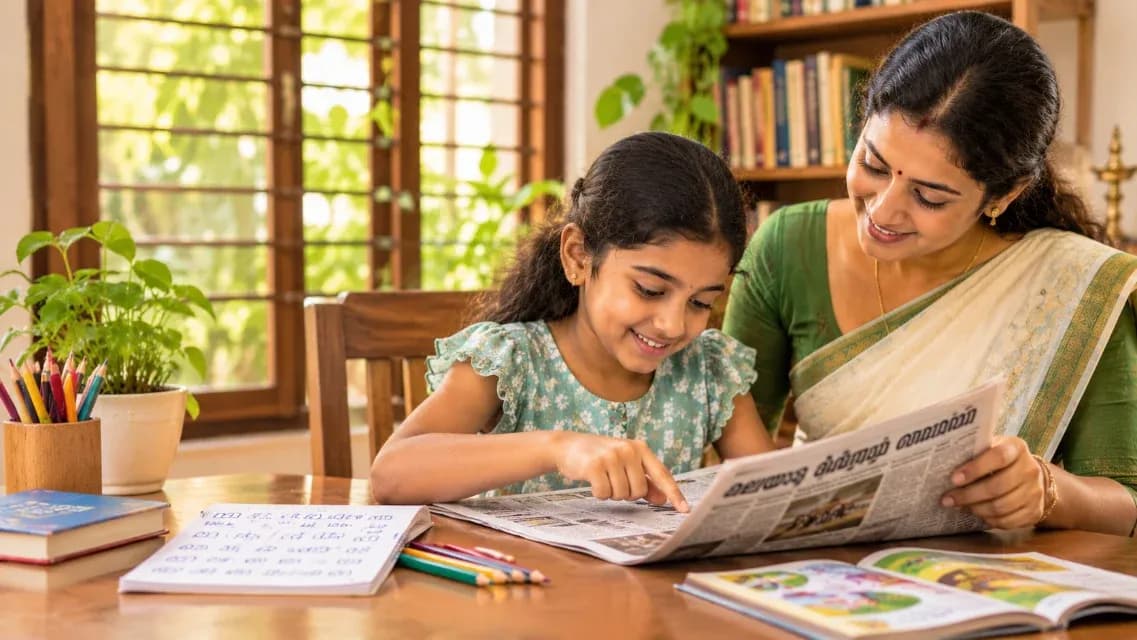
How to Read Malayalam Newspaper Headlines: A Beginner’s Guide
Malayalam newspaper headlines highlight the main points of a news story in just a few words, making them a useful reading exercise for beginners. If you want to learn to read Malayalam beyond textbooks, headlines give you real, current language in small pieces. We explain why headlines are worth your time, how they are built, which words appear most often, and how to read one from start to finish. You will also find practice tips, common mistakes, and ways to build vocabulary.
Why Is Reading Malayalam Newspaper Headlines Important?
When you read Malayalam newspaper headlines, you slowly get used to the words and phrases people use in writing. Headlines also work well for children. Parents who want to start Malayalam reading for kids will find that short lines feel far less tiring than a long story.
Reading one headline each day also helps build a regular reading habit without feeling overwhelmed. You also meet words used in real life, such as government, rain, price, and exam, instead of words chosen only for a classroom.
Headlines also show how written Malayalam differs from the language spoken at home. Newspaper headlines are professional and clear, whereas the spoken language in Malayalam differs from region to region and from normal speech.
Understanding the Structure of Malayalam Newspaper Headlines
A Malayalam headline usually names the subject and the event, and it often stops there. Writers drop small connecting words to save space, so headlines read like a summary rather than a full sentence. Once you know this pattern, you find the meaning faster.
Common Malayalam Words Used in Newspaper Headlines
Headlines repeat a small set of words about government, weather, law, and public life. Learning these common words first lets you read many front-page headlines with less effort. Start with the examples below and gradually add new words to your vocabulary each week.
How to Read Malayalam Newspaper Headlines Step by Step
Read a headline in six steps: check the letters, split it into words, find the subject, locate the verb, read the opening paragraph, and note new words. Follow the same order each day.
Here is an easy example to work on these steps with.
In this headline, കേരളത്തിൽ shows where the event is happening, while കനത്ത മഴ tells you what is happening. Even without a verb, you can understand that the news is about heavy rain in Kerala.
Tips to Improve Malayalam Reading and Comprehension Skills
Read for ten or fifteen minutes a day and learn to identify letters and become used to words to build your confidence with reading. Look for interesting news subjects and read the headlines out loud. You can build your ability to read Malayalam and gain some understanding through practice without getting lost.
Common Challenges Beginners Face When Reading Malayalam Newspapers
Most beginners find joined letters, long words, and unfamiliar vocabulary the hardest parts of reading Malayalam newspapers. If you face similar difficulties, many other learners do too. These struggles are common, and each has an easy solution that you can experiment with now.
Best Ways to Improve Malayalam Vocabulary Through Daily News
Maintain a notebook for new words, sort them by topic, and review them often. Daily news shows you words in real context, so they stay in your memory much longer than they would from a plain word list alone.
Read more about Malayalam Numbers 1 to 100: A Fun Learning Guide for Kids
Learn Malayalam Reading With Red Parrot Language Learning School
At Red Parrot Language Learning School in Kakkanad, Kochi, we help children and beginners develop Malayalam reading and writing skills through interactive online classes. Our Malayalam reading and writing classes cover everything from recognising letters to forming meaningful sentences, with regular guidance from experienced teachers.
For parents exploring Malayalam classes for kids in Kochi, we use games, stories, and activities to make learning enjoyable. We also provide Malayalam tuition in Kochi for learners who need consistent support.
Ready to improve your child's Malayalam reading skills? Contact Red Parrot today to explore our courses and enrol!
Leave a Reply
Your email address will not be published. Required fields are marked *
STAY CONNECTED WITH RED PARROT SCHOOL
Stay updated on new programs, resources and language learning insights

Information
- Red Parrot Language School.
- No. 4/461, 2nd Floor Suite No. 399 Valamkottil Towers Judgemukku, Kakkanad, Kochi, Kerala 682021
- info@redparrotschool.com
- 9037495104